
AI Robotics Growth Is Outpacing Software Architecture Safety
Written by Rebecca Uffindell Thu 28 May 2026
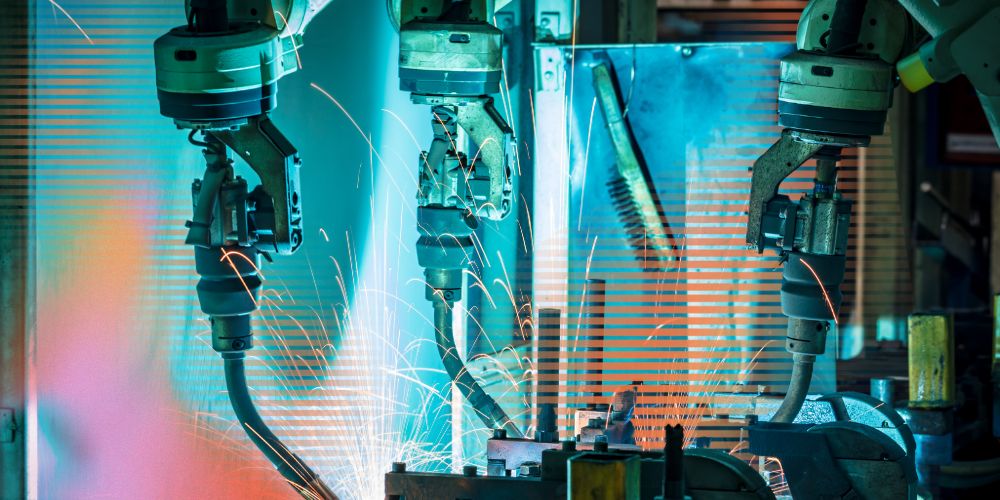
Robotics systems are increasingly moving beyond controlled industrial environments and into spaces shared directly with humans. Warehouses, logistics hubs, manufacturing facilities and commercial environments are becoming more autonomous, more connected and more dependent on AI-driven decision making.
The software architectures underpinning those systems are evolving more slowly.
New findings from QNX’s Inside the Robot: Architecture Benchmark Report 2026 suggest robotics developers are confronting a widening gap between AI ambition and architecture maturity. Confidence in robotics remains high, particularly in the UK, but operational readiness is becoming more difficult to sustain as systems grow more complex.
Across the developers and engineers surveyed globally, 85% expect software to play a larger role in robotics during the next three to five years, while 89% believe physical AI-based robotics will become critical to their strategy during that period.
At the same time, many teams are struggling with integration complexity, certification pressure and the challenge of maintaining predictable behaviour under real-world conditions.
AI Robotics Software Architecture Is the New Bottleneck
For years, robotics development was constrained largely by hardware capability — sensors, processing power, and mechanical systems. The balance is changing.
Globally, 27% of respondents now identify software architecture and integration as the primary factor limiting robotics performance, compared to 16% who point to hardware capability. In the UK, one-third of respondents identify architecture and integration as the biggest bottleneck.
That pressure increases as robotics systems absorb more AI functionality and move into environments where operational determinism becomes increasingly important.
Many organisations continue to rely on software environments not originally designed for mixed-criticality workloads, real-time execution or scalable autonomous behaviour. A total of 91% of respondents globally say they currently use a general-purpose operating system to run at least some real-time or safety-critical workloads.
Integration complexity is already emerging as a structural issue. A total of 42% of respondents identify integration as one of the biggest software development challenges, while 41% cite debugging and testing burdens.
These concerns increasingly influence deployment timelines, scalability, and operational reliability from the outset.
Deterministic Robotics Systems Are Becoming Safety Infrastructure
As robotics systems operate more frequently alongside humans, deterministic real-time execution – the ability for systems to respond predictably and within guaranteed time constraints under real-world conditions – is becoming increasingly important.
A total of 95% of respondents globally say deterministic behaviour is important to their organisation, including 97% in the UK.
The report suggests many current systems achieve predictability through tightly managed optimisation and constrained deployment environments rather than architectures inherently designed to scale safely over time. Only 25% of respondents globally believe their current architecture could scale significantly to support more demanding real-time workloads in the future.
This becomes particularly important in environments where robotics systems interact directly with people, physical infrastructure, and unpredictable real-world conditions.
Operational determinism is increasingly becoming part of the safety layer itself.
Robotics Certification and Regulatory Pressure
Technical complexity now sits alongside certification pressure, regulatory overhead and growing operational expectations.
Globally, 66% of respondents report project delays linked directly to certification requirements, rising to 69% in the UK and 70% in Germany.
Cybersecurity regulation, AI governance, and functional safety standards are all contributing to longer development and deployment cycles. In the UK, 59% of respondents cite cybersecurity regulation as a major challenge, while 58% point to AI and machine learning regulation.
At the same time, commercial pressure continues to intensify.
A total of 84% of respondents globally believe pressure to deliver projects on time and on budget can lead developers to compromise on critical areas such as safety.
The result is a difficult operating environment where organisations are trying to accelerate AI capability while simultaneously managing certification timelines, safety requirements, integration complexity, and increasingly demanding operational expectations.
AI Capability vs Operational Predictability
The report reveals a noticeable divergence between confidence in AI capability and confidence in predictable real-world operation.
Globally, 89% of respondents view physical AI as critical to robotics strategy during the next three to five years.
Confidence weakens when respondents are asked whether those systems can make safe and predictable decisions consistently in real-world safety-critical environments.
Only 29% globally say they are “very confident” in that capability. In the UK, the figure rises modestly to 35%.
That gap matters because many of the next-generation robotics deployments now being prioritised involve environments where unpredictability carries operational, legal, and physical consequences simultaneously.
The report also suggests that some developers are becoming increasingly aware that architecture scalability may become a more important limiting factor than AI capability growth itself.
Robotics Development Is Now an Architecture Maturity Challenge
One of the clearest conclusions emerging from the research is that robotics systems are becoming increasingly dependent on foundational software decisions.
Operating systems, middleware, real-time execution environments and integration layers are becoming part of the operational infrastructure underpinning autonomous systems.
As robotics systems become more autonomous and interconnected, architecture maturity increasingly determines whether those systems can operate reliably under real-world conditions.
The implications extend beyond engineering teams. Architecture maturity increasingly influences deployment readiness, certification speed, operational resilience, scalability and organisational risk exposure across robotics environments operating at a larger scale.
Written by Rebecca Uffindell Thu 28 May 2026
Tags:
AI integration AI Risks robotics Robotics RegulationMost Viewed News
Fri 2 Oct 2026
AI skills gap grows despite 64% of workers using AI